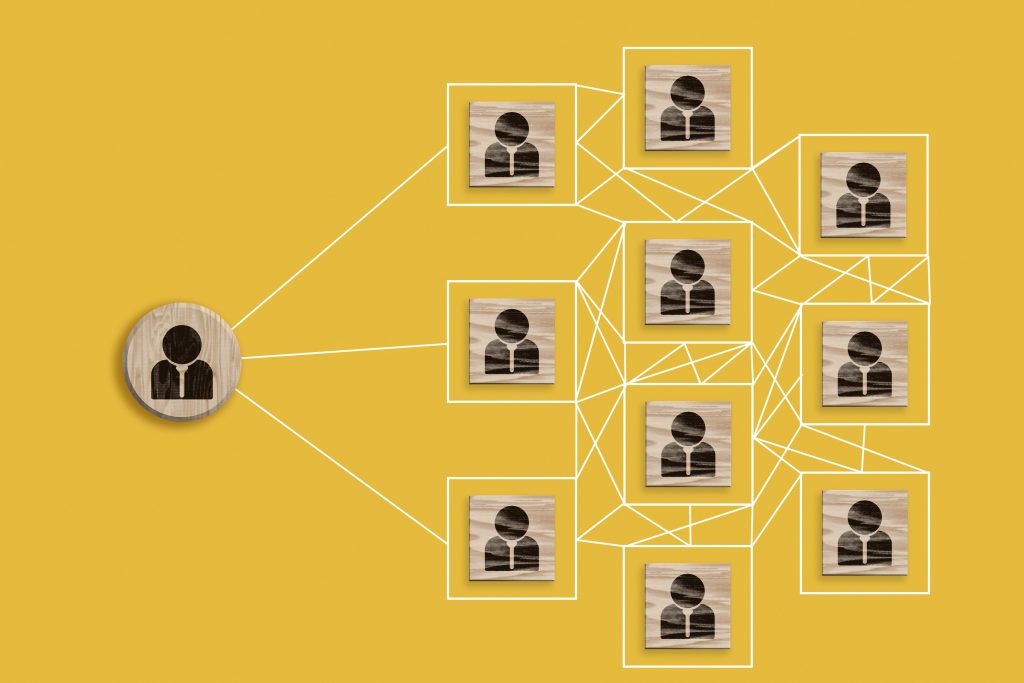
In 2026, AI is no longer a tool to generate content or answer questions. It’s helping businesses automate workflows, improve decision-making, and solve complex problems alongside people.
Stanford’s AI Index 2026 finds that generative AI reached 53% global adoption in just three years, faster than the internet or the personal computer. AI is projected to add $15.7 trillion to the global economy by 2030, and businesses can’t afford to ignore where it’s headed.
Here are 10 trends that are shaping the rest of 2026 and what they mean for your business.
1. AI Agents Will Become Your Digital Team Members
AI agents are emerging as digital teammates able to complete entire workflows. They can look up information, analyze documents, update CRM systems, schedule meetings, create reports, talk to other software, and even collaborate with other AI agents.
Instead of asking AI to “write an email,” businesses are now asking AI to:
- Qualify new leads
- Respond to customer inquiries
- Generate proposals
- Update project management systems
- Monitor inventory
- Schedule appointments
- Prepare weekly reports
People remain responsible for strategy and decisions, while AI handles repetitive execution. This means that small teams can do a lot more without constantly hiring more people for a lot of businesses.
Gartner forecasts that 40% of enterprise applications will include task-specific AI agents by 2026, up from less than 5% in 2025. OpenAI’s ChatGPT agent can browse the web and complete tasks autonomously. Claude from Anthropic can write and run code, use tools, and work through complex multi-step problems across real systems. This means that smaller teams can compete with much larger organizations.
2. AI Will Become Better at Working With People, Not Replacing Them
Businesses are discovering that the greatest value comes when AI works alongside employees, handling repetitive tasks while people focus on creativity, relationships, strategic thinking, and problem-solving.
Instead of replacing marketers, AI helps create first drafts faster.
AI doesn’t replace developers – it helps developers code, test, and document.
AI does not replace customer service teams but rather handles routine questions so staff can focus on more complex customer needs.
In scientific fields, AI has moved well past literature review and summary generation. Peter Lee, president of Microsoft Research, calls this the logical application of “pair programming” to science: where AI can propose experiments, interpret results, and find patterns that would take human teams much longer.
3. AI Search Is Changing How Customers Find Businesses
Consumers are increasingly questioning ChatGPT, Gemini, Perplexity, Claude, and Google’s AI Mode. Instead of visiting 10 websites, users often find a complete answer within seconds. That changes how companies are viewed.
Now companies have to optimize for content AI systems can understand, trust, and cite, rather than just Google rankings.
This means:
- Answering questions clearly
- Publishing authoritative content
- Using structured data
- Demonstrating expertise
- Keeping business information accurate
4. AI Automation Will Move Beyond Simple Workflows
Modern AI workflows can:
- Read emails
- Understand documents
- Extract information
- Make decisions based on business rules
- Trigger multiple systems automatically
- Notify employees only when human approval is required
For example, an AI workflow can receive a sales inquiry, qualify the lead, create a CRM record, schedule a meeting, create a proposal, and notify the sales team, all without manual data entry. Businesses are saving not minutes – but hours – every day.
With AI getting better, these workflows will only get better at handling multi-step business processes with little supervision.
5. AI Security and Governance Are Becoming Business Priorities
Every AI system today needs explicit permissions, regulated access to business data, and guardrails to prevent sensitive information from being revealed.
Industry experts increasingly recommend treating AI agents much like employees:
- Give them defined responsibilities.
- Limit what they can access.
- Monitor their activity.
- Review important decisions.
AI regulations are evolving, and having robust governance will be a competitive advantage.
6. AI Is Becoming Industry-Specific
- Healthcare organizations are using AI to assist with diagnostics and patient support.
- Manufacturers are optimizing production planning and predictive maintenance.
- Financial firms are improving fraud detection and risk analysis.
- Retailers are using AI for inventory forecasting, customer personalization, and demand prediction.
Software development is changing fast too. GitHub says developer activity continues to hit new highs, with AI coding assistants helping teams write, review, and improve code faster than ever before.
AI is becoming an expert assistant, not a replacement for professionals, that understands the unique challenges of different industries.
7. Businesses Will Compete on AI Strategy, Not Just AI Tools
Only a few years ago, businesses were asking:
“Should we use AI?”
Today the better question is:
“Where will AI create the biggest competitive advantage?”
That answer looks different for every business.
For some, it’s improving customer support.
For others, it’s automating operations.
Some organizations are transforming sales.
Others are speeding up software development or improving marketing performance.
Successful companies have a clear strategy for embedding AI into the day-to-day operations of the business, while keeping people at the center of decision-making.
8. Multimodal AI Is Now Standard, Not Special
The top models of 2026 – Gemini 3 and ChatGPT-5 among them – are natively multimodal, accepting text, images, audio and video all within unified systems.
On the generation side, thanks to the advancements of OpenAI’s Sora 2 and Google’s Veo 3.1 (updated in January 2026 with richer audio and stronger editing controls), video generation has reached a level where it is being used in real production workflows by creative and marketing teams. Image generation has become precise enough to handle text rendering and brand-consistent visual output at scale.
And for businesses, it means marketing content, customer communications, training materials, and product visuals are created faster than ever.
9. Responsible AI Is Lagging Behind Capability
The Stanford AI Index 2026 said that almost all frontier AI developers report on capability benchmarks, but reporting on responsible AI metrics is still inconsistent. In 2025, the number of recorded AI incidents reached 362, up from 233 the year before. Importantly, studies have shown that improving one aspect of responsible AI, such as safety, can come at the expense of another, such as accuracy. These are not simple trade-offs.
For organizations deploying AI, governance infrastructure cannot be an afterthought. That means understanding what you can automate, what you have to have human review, and what you have to leave to human judgment. And then building those distinctions into the systems from the start, not as an afterthought.
What Should Businesses Do Next?
You don’t need to adopt every new tool. Instead, focus on a few practical areas:
- Identify repetitive tasks that consume valuable employee time.
- Explore AI automation opportunities before adding more staff.
- Create helpful, authoritative content that can appear in AI search results.
- Keep your website, CRM, and business information accurate and structured.
- Develop internal AI guidelines, so your team uses AI consistently and securely.
- Continue investing in human expertise while allowing AI to handle repetitive work.
Companies that make small, strategic moves today will be far better positioned as AI continues to become part of everyday operations.
What This Means for Your Business Right Now
The companies most likely to win from these AI breakthroughs in 2026 are those that take a strategic approach to AI: they identify specific, measurable use cases, leverage a clean data foundation, and understand AI as a capability to integrate, rather than a solution to deploy.
At J. Arthur & Co., we help businesses combine AI, software, SEO, digital marketing, ERP, CRM, and automation into practical systems that create long-term growth. As AI continues to evolve, the goal is to use it where it creates measurable business value. If you want to understand what that looks like for your business, let’s talk.
FAQs
Q: What are the top AI trends to watch in 2026?
A: The biggest AI trends in 2026 will be AI agents, multimodal AI, AI-powered search, intelligent automation, industry-specific AI, open-weight models, and stronger AI governance. These trends are fueling the automation of work, smarter decision-making, and better customer experiences.
Q: What is the future of AI in 2026 and beyond?
A: It’s characterized by AI moving from tool to partner — collaborating with humans rather than simply responding to them. AI agents will perform complex, multi-step workflows with little supervision. AI will assist in making scientific discoveries, including generating ideas and testing them. Healthcare AI will provide specialist knowledge to underserved populations around the world. Quantum-AI hybrid computing will start solving problems that classical systems cannot.
Q: What are the latest AI innovations in 2026?
A: Reinforcement Learning with Verifiable Rewards (RLVR): More scalable training of AI reasoning. Agentic systems that can do real tasks over external tools and APIs. Repository intelligence: Gets the whole codebase, not just snippets. Native multimodal models that combine text, images, audio, and video into a single system. Microsoft’s Majorana 1 quantum chip, with topological qubits for better stability. Powerful open-weight models, like Qwen3-Coder-Next and gpt-oss, released widely and able to run on local hardware.
Q: How will AI affect businesses in 2026?
A: AI will transform business in 2026, allowing small teams to make use of the work of much larger teams. Campaigns that once needed thirty people can now be run by three. Agentic AI automates data processing, content generation, and personalization so humans can focus on strategy. AI-powered coding tools make software development much faster. AI infrastructure is becoming more available and affordable to SMBs.
Q: What is agentic AI and why does it matter in 2026?
A: Agentic AI is when AI systems not only answer questions but also plan, take actions, and complete multi-step tasks across real tools, systems, and external platforms autonomously. Instead of waiting for prompts, agents pursue goals across sequences of actions (e.g., browsing the web, executing code, querying databases, coordinating with other systems).
Q: What AI trends should small businesses watch in 2026?
A: Four AI trends small businesses should pay the closest attention to in 2026 are: Democratization of open-weight models that enable powerful AI without requiring an enterprise budget. Low-code and no-code AI platforms that require no technical expertise to use. Agentic AI tools that enable small teams to operate with the output of much larger ones. AI-optimized search visibility (AEO and GEO) that determines whether their business shows up in AI-generated answers where customers increasingly make purchasing decisions.