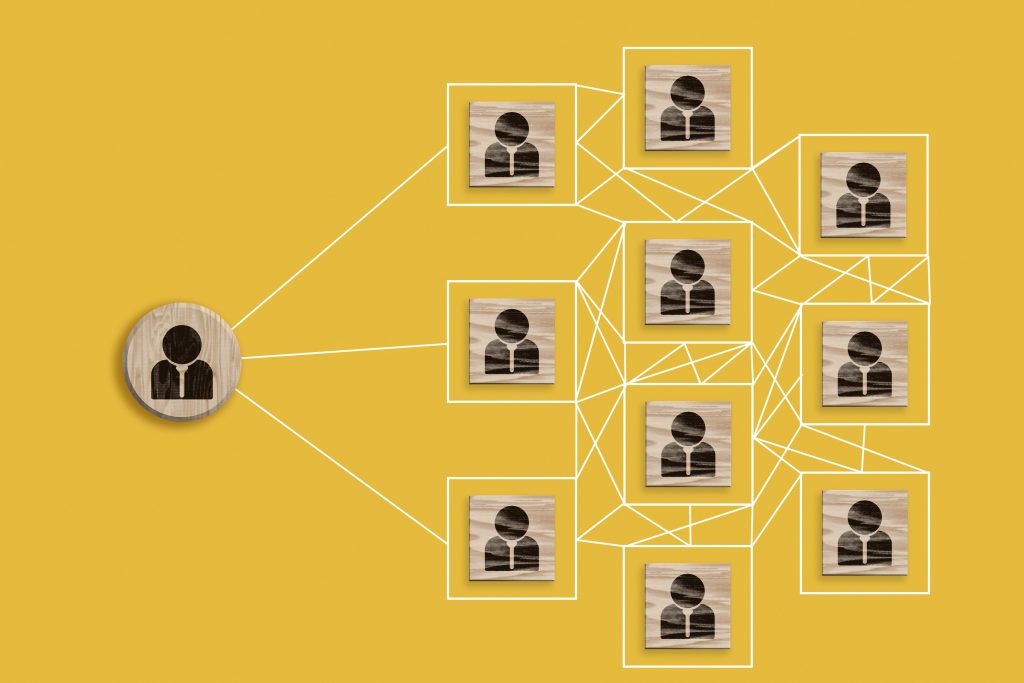
What was once a platform to post updates and chat with friends. But now it’s one of the most powerful marketing media for businesses.
Brands are expected to generate content often, reply to customers swiftly, monitor trends in real time, and compete for attention in increasingly crowded feeds. And that’s where AI on social media is making a big difference.
Today, AI enables organizations to generate content, evaluate consumer behavior, improve advertising campaigns, track brand sentiment, and automate repetitive jobs. AI is playing an ever-increasing role in social media, with over 80% of social media suggestions coming from AI and 88% of marketers using AI in their everyday work.
This article discusses what AI on social media is, how firms are employing it now, and the benefits it provides to modern marketing.
What Is AI on Social Media, Really?
Artificial intelligence in social media is the use of machine learning, natural language processing, and language-based models to assess, predict, and automate essential portions of a social media strategy. These technologies provide content recommendations, audience segmentation, sentiment analysis, moderation, ad targeting, and customer involvement.
How Brands Are Actually Using AI in Social Media?
Content Creation and Optimization
AI tools can assist with:
- Caption writing
- Content ideas and brainstorming
- Hashtag recommendations
- Video scripts
- Image generation
- Content repurposing
Beyond text or photos, AI helps marketers come up with concepts, test out multiple message strategies, and find trends that boost interaction. Recent data shows that 83% of marketers claim generative AI is helping them efficiently produce more content to keep a constant publishing schedule.
Social Listening and Sentiment Analysis
Today’s social listening tools are capable of analyzing hundreds of mentions, comments, reviews, and discussions across several platforms at the same time.
AI can identify:
- Positive sentiment
- Negative sentiment
- Emerging customer concerns
- Trending topics
- Competitive insights
- Potential PR risks
Teams get actionable insights in real time. In fact, research reveals that over 60% of social marketers increasingly prefer social listening solutions because they offer faster visibility into customer behavior and market trends.
Personalization and Recommendations
Recommendation algorithms employ user behavior, interests, interactions, watch time, and engagement history to provide personalized content experiences.
For brands, this means AI can help:
- Deliver more relevant content
- Improve engagement rates
- Increase audience retention
- Enhance customer experiences
- Improve conversion rates
Meta’s AI-powered recommendations in Reels are presently contributing to about a 5% bump in conversions through better content matching. 71% of social media marketers have now incorporated AI tools into their plans specifically because AI-generated content outperforms non-AI content on key engagement metrics.
Paid Social Media Optimization
AI helps brands:
- Identify high-performing audiences
- Optimize bidding strategies
- Allocate budgets efficiently
- Test multiple ad variations
- Predict campaign outcomes
AI helps marketers to optimize campaign performance in real time. Pinterest revenue grew 17% year over year to $998 million, partly because of its AI-powered ad capabilities.
Customer Service and Chatbots
Studies have shown that most customers expect firms to reply to social media inquiries within 24 hours, and many demand even faster response times.
AI-powered chatbots help businesses manage these expectations by:
- Answering common questions
- Routing inquiries
- Providing order updates
- Handling simple support requests
- Escalating complex issues to human teams
Industry projections say AI might handle most regular customer service exchanges in the coming years, allowing support workers to concentrate on more sophisticated conversations.
Benefits and Risks of AI in Social Media
When applied successfully, AI helps organizations produce content faster, enhance audience targeting, automate repetitive operations, and gain a deeper insight into customer behaviour.
However, the same systems that create efficiency can also introduce new challenges:
- One of the largest issues is still the mismatch in tone and voice. AI can produce content rapidly, but without human oversight, it might misfire when it comes to a brand’s particular personality and emotional complexity.
- Gray-zone talks – those that touch on cultural sensitivity, emerging social issues, or audience-specific complexity – nearly always require human judgment due to gaps in context and nuance. AI doesn’t have the cultural sensitivity to do this consistently.
- Algorithm penalization is becoming more and more real. Social platforms are aggressively detecting and de-ranking over-optimized low-value AI content. Even if you throw AI into the equation, quality trumps quantity.
- Privacy and data are still a big deal. Generative AI is dependent on user data, and 71% of consumers are concerned about how generative AI uses their data.
- Deepfakes and misinformation pose serious concerns. AI can generate convincing but fraudulent content, and platforms are asking for more and more disclosure. Meta is now requiring authors to flag AI-generated content on Instagram and Facebook – a trend that will probably spread to other platforms.
The Right Framework: Human + AI
Automate repetitious and large-volume activities: scheduling, simple Q&A, content variations, performance reporting, and routing.
Leverage AI-powered insight for audience research, content ideation, paid optimization, and trend tracking – where AI speeds up human decision-making, not replaces it.
Leave human judgment for sensitive interactions, crisis response, community participation, brand voice decisions, and anything that requires real empathy or cultural expertise.
What's Coming Next?
Computer vision is giving AI even more ability to analyze visual content – automatically identifying, categorizing, and drawing sentiment from images and videos, and enabling more precise targeting based on what consumers are actually looking at.
AI will supercharge hyper-personalization, as more extensive behavioral datasets will be used to create individual-level content experiences that will blur the border between social media and personal recommendation engines.
Virtual and AI influencers are already beyond a novelty – AI influencers like Mia Zelu now have more than 165,000 followers, and Aitana López is generating steady revenue, exceeding some human producers. 92% of brands say they are now using or plan to use AI to help them execute influencer campaigns.
Autonomous campaign management is happening at an increasing speed. Meta is helping marketers run AI-managed campaigns by 2026 with little human setup, spanning pictures, video, copy, and targeting.
The AI-powered social media industry is expected to expand from $2.4 billion in 2024 to $8.1 billion in 2030, with a CAGR of 19.3%. That growth represents a real change in how social media strategy is designed, performed, and measured, not simply about technological use.
At J. Arthur & Co., we create full digital systems using social media strategy – beginning with your website and continuing to every channel where your customers are paying attention. If you’d like to see how AI fits into a better, more sustainable social media approach, let’s talk.
FAQs
Q: What is AI in social media?
A: AI in social media refers to the application of machine learning, natural language processing, and algorithmic models to automate, analyze, and optimize social media activity.
Q: How is AI used in social media marketing?
A: Generating and optimizing content at scale; Personalizing recommendations based on user behavior; Analyzing brand sentiment and identifying emerging trends through social listening; Improving ad targeting and bid optimization for paid campaigns; Automating customer service triage with chatbots; and Providing predictive analytics to forecast campaign outcomes.
Q: What are the benefits of AI in social media?
A: The main advantages of using AI for social media include: • Rapid content creation and idea generation • Improved targeting and personalization for specific audiences • Anticipatory brand surveillance and early crisis identification • Enhanced efficiency and return on investment for paid advertising • Lower operational expenses by automating routine activities • Ongoing performance enhancement via real-time data analysis
Q: What are the risks of using AI in social media?
A: The biggest risks of using AI for social media include a disconnect between tone and voice that makes content feel inauthentic, a lack of context and nuance for sensitive conversations, algorithms penalizing low-quality or overly optimized AI content, data privacy concerns, misinformation spread by AI-generated content, and over-reliance on automation that can kill true audience engagement and brand trust.